
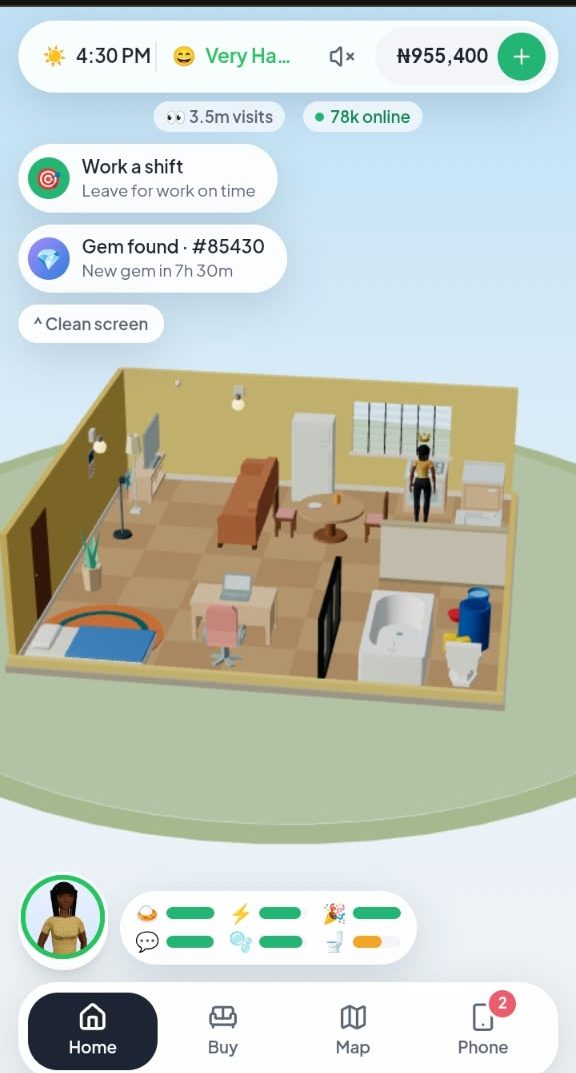
By Francess Ekezie
Lagos is more than a city. It is a fast-paced environment shaped by transportation, business, social relationships, digital payments, entertainment and the everyday decisions people make to survive and thrive.
For developers building a Lagos life simulation game, these experiences present an opportunity to create a virtual world that feels familiar to Nigerian players while remaining accessible to a global audience.
Application Programming Interfaces (APIs) can help connect different systems and services, enabling game developers to introduce features such as simulated banking, ride-hailing, local maps, digital commerce and social interactions.
The goal is not to connect every real-world service directly to the game. Instead, developers should identify integrations that improve gameplay, authenticity and player engagement.
Here are some API integrations worth considering.
1. Digital Payments and Virtual Banking
Money plays a central role in everyday Lagos life, from paying for transportation and food to managing rent, business expenses and personal savings.
A life simulation game could recreate these experiences through a virtual banking system where players receive salaries, transfer money, pay bills, save towards goals and manage business revenue.
Potential integrations:
- Paystack or Flutterwave: For optional real-money transactions, such as purchasing game credits or premium features.
- A custom virtual banking API: To simulate account balances, transfers, savings, loans and financial records without using real money.
- A virtual merchant payment system: To let players purchase in-game items and services.
Developers should keep in-game currency separate from real-world payment systems. Real-money payments should be optional, transparent and protected against fraud.
2. Maps, Navigation and Location-Based Experiences
Navigating Lagos is an experience of its own. From Victoria Island and Lekki to Yaba, Ikeja and Surulere, different neighbourhoods have different lifestyles, opportunities and costs of living.
Map APIs could help developers create a city where players travel between neighbourhoods, discover businesses, attend events and unlock new opportunities.
Potential integrations:
- Google Maps Platform: For mapping, place discovery and location data where licensing permits.
- Mapbox: For customised map visualisations and interactive navigation.
- OpenStreetMap: As a potential source of geographic data, subject to its licence and attribution requirements.
Developers could combine these tools with a custom Lagos-inspired map featuring fictional addresses, transport routes, markets, offices, residential areas and entertainment districts.
A fictionalised city map may be more practical than reproducing Lagos in full detail, especially where gameplay requires predictable travel times and controlled environments.
3. Transportation and Mobility APIs
Transportation is an essential part of life in Lagos. Players could commute to work, travel to business meetings, visit friends or choose between different transport options based on their budgets.
A transportation system could include danfo buses, BRT, ride-hailing, motorcycles where appropriate to the fictional setting, and private vehicles.
Potential integrations:
- Google Routes or Mapbox Directions: To estimate travel distances and route options.
- Ride-hailing partner APIs: If a suitable partner offers authorised access to ride or fare data.
- A custom transport simulation API: To manage fares, traffic congestion, route availability, vehicle ownership and travel time.
Developers should not assume that commercial ride-hailing APIs are publicly available for unrestricted game use. A custom simulation system may provide more control over fares, traffic and transport availability.
4. Messaging and Social Interaction APIs
Social relationships can make a life simulation game more engaging. Players could build friendships, maintain romantic relationships, negotiate business deals, join communities and coordinate events.
Messaging integrations could support notifications and multiplayer coordination, while an in-game messaging system could simulate the communication patterns familiar to Nigerian users.
Potential integrations:
- Firebase Cloud Messaging: For push notifications about in-game events, job opportunities and messages.
- A custom chat API: For player-to-player messaging, groups and social interactions.
- Email delivery services: For account verification, password recovery and important account notifications.
WhatsApp-style interactions could be recreated inside the game without directly integrating WhatsApp. If developers choose a real messaging platform, they should verify its API policies and ensure that player consent and privacy requirements are met.
5. Jobs, Careers and Business APIs
A Lagos life simulation game should offer more than movement around a virtual city. It should give players reasons to explore, work, build businesses and improve their living standards.
A career system could let players apply for jobs, attend interviews, earn salaries, develop skills, start small businesses and expand into larger enterprises.
Potential integrations:
- A custom job marketplace API: To manage vacancies, qualifications, interviews and employment.
- A virtual business management API: To handle inventory, customers, revenue, expenses and business growth.
- Learning and skills APIs: To introduce optional career development or educational challenges.
For example, a player might start as a junior employee in Yaba, save money for a business, rent a shop in another neighbourhood and eventually hire other players or non-player characters.
A custom system would allow developers to model the realities of entrepreneurship and employment without depending on third-party job platforms.
6. Weather and Environmental APIs
Weather can affect daily routines and make a virtual city feel more alive. Heavy rainfall could influence travel times, outdoor activities and business operations, while hot weather might change how players interact with their surroundings.
Potential integrations:
- OpenWeather: For weather conditions and forecasts, subject to the provider’s API terms.
- A custom environmental simulation API: For traffic disruptions, flooding scenarios, power interruptions and other gameplay events.
Real-world weather should be used thoughtfully. For a game, developers may prefer simulated events so that environmental changes remain balanced and do not frustrate players.
7. Entertainment, Music and Events APIs
Lagos has a vibrant entertainment culture that spans music, nightlife, fashion, comedy, festivals and live events.
A simulation game could include virtual concerts, club nights, fashion shows, community gatherings and cultural celebrations.
Potential integrations:
- An event management API: To organise in-game events and limited-time activities.
- Licensed music services or catalogues: Where the relevant provider permits use in a game.
- A custom event API: To manage event schedules, attendance, rewards and player participation.
Music streaming APIs should not automatically be treated as permission to use tracks inside a game. Developers must obtain the appropriate commercial and gameplay licences.
8. E-Commerce and Virtual Marketplaces
Markets, shops and small businesses are part of Lagos’s everyday economy. A virtual marketplace could allow players to buy clothes, furniture, food, electronics, property-related items and business supplies.
Potential integrations:
- A custom marketplace API: For product listings, stock management, pricing and in-game transactions.
- Payment gateway APIs: For optional purchases involving real money.
- A digital inventory API: To manage player-owned items, trading and storage.
A marketplace could also introduce player-run businesses, allowing players to set prices, attract customers and compete with other sellers.
The developers should clearly distinguish virtual goods from physical products and establish rules for trading, refunds and prohibited items.
9. Identity, Authentication and Cloud Infrastructure
As the game grows, developers will need secure account management, reliable storage and systems that support players across different devices.
Potential integrations:
- Firebase Authentication or Auth0: For account registration and login, subject to platform suitability.
- Cloud databases and backend services: For player profiles, game progress, inventory and virtual finances.
- Analytics platforms: To understand player retention, popular features, progression and performance issues.
Authentication should protect accounts, while server-side validation should prevent players from manipulating balances, inventory, rewards or other important game data.
Developers should also minimise the personal information collected and implement appropriate security and data-protection measures.
Which APIs Should Developers Build First?
Not every integration needs to be available at launch. The best approach is to start with the features that directly support the core gameplay loop.
Build the Core Experience Before Adding External Dependencies
API integrations can improve a Lagos life simulation game, but adding too many third-party services too early can increase costs, complexity and maintenance requirements.
Developers should first build a reliable core backend for the game economy, player profiles, transport, careers and inventory. External APIs should be introduced when they solve a clear problem or provide value that would be difficult to reproduce internally.
It is also important to consider API pricing, usage limits, licensing, availability, privacy, security and what happens when a third-party service becomes unavailable.
A compelling Lagos life simulation game does not need to connect every part of the real world. It needs to capture the experiences that make life in Lagos distinctive: finding work, managing money, navigating the city, building relationships and creating opportunities.
With a thoughtful combination of custom APIs and carefully selected third-party integrations, developers can create a virtual Lagos that is interactive, culturally relevant and capable of growing alongside its players.
The strongest starting point is a dependable game backend, a believable virtual economy and a transport and career system that gives players meaningful choices. More advanced integrations can follow as the game evolves.





Leave a Reply